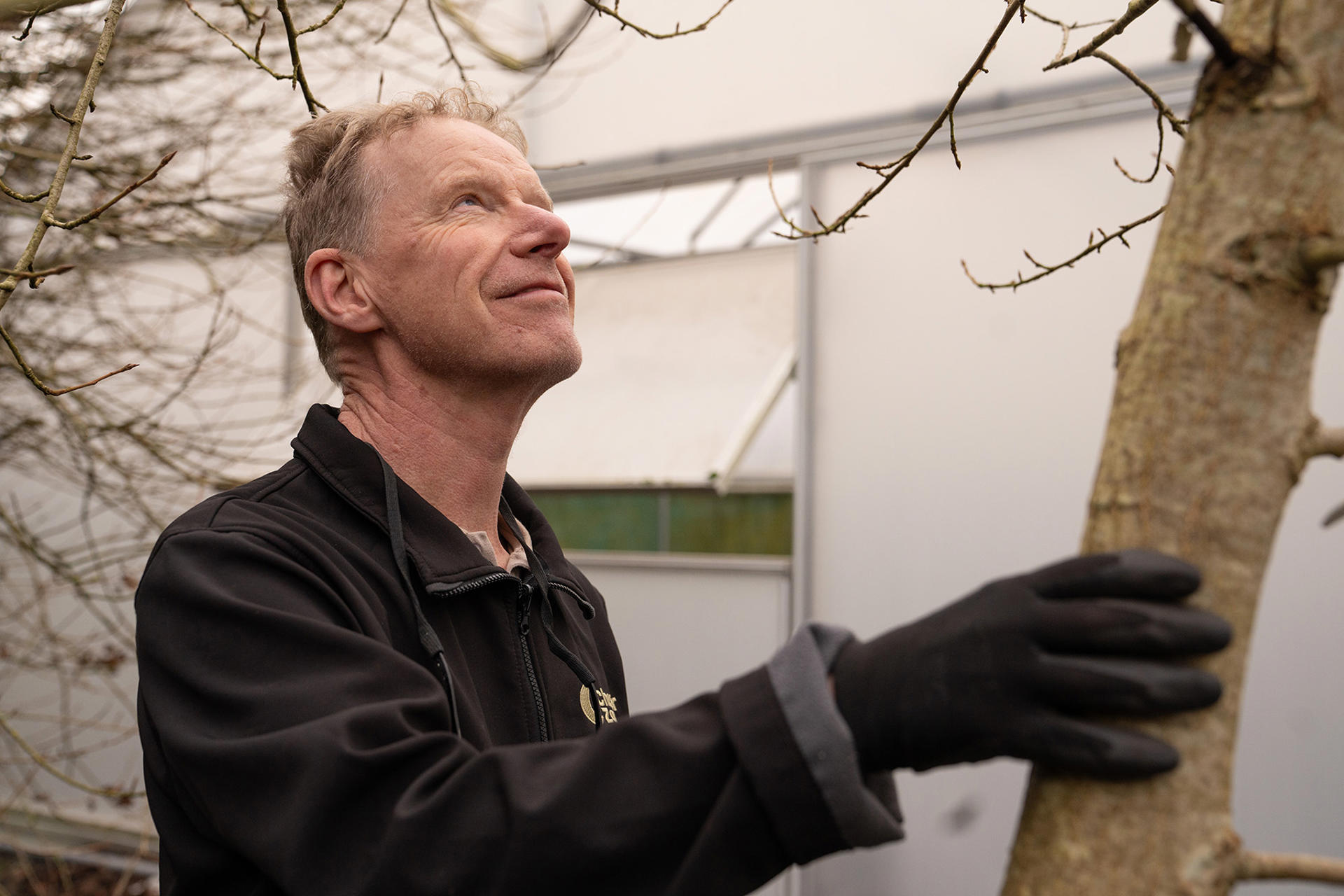
A year of hope for UK’s rarest timber tree
This National Tree Week, our plant experts are celebrating a milestone in their bid to protect rare black poplars.
We have distributed 70 of the UK’s rarest timber trees in the last 12 months as part of a project to boost British biodiversity!
This National Tree Week, which runs from November 21 to 28, our plant experts are celebrating a milestone in their bid to protect rare black poplars.
Over the last year, more than 70 saplings have been planted out by our horticulturists or handed to other plant conservationists in the northwest in hopes of establishing new colonies of these highly at-risk trees.
This week, Tarvin Community Woodland Trust are planting the 70th black poplar sapling, which will replace a male tree that was vandalised a few years ago.
One of the biggest planting exercises of the year took place when our horticulture experts teamed up with Cheshire East Council and CLECO Ltd to establish 40 black poplar saplings on former farmland near Nantwich.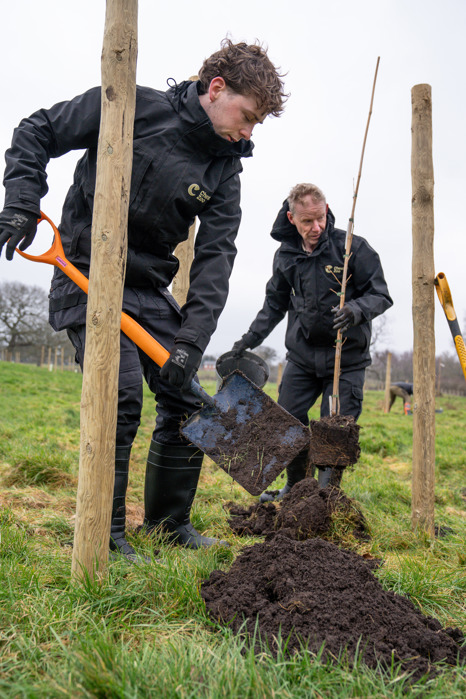
According to the Woodland Trust, black poplars are one of the most endangered trees in the UK.
Richard Hewitt, Team Manager for our plant nursery, is part of the team cultivating the trees behind the scenes.
They’re a native tree, they provide homes for other species, like bees and moths, and they’ve been part of our countryside for thousands of years. We don’t want them to disappear.
Richard Hewitt - team manager of the Chester Zoo plant nursery
Most trees have both male and female characteristics, but black poplars are either male or female. Males have red catkins and females grow yellow catkins.
Black poplars were once an important part of the UK timber economy. The wood has naturally antifungal properties, so they were used for floorboards and cartwheels.
Mr Hewitt said:
“About two hundred years ago, faster-growing poplars were imported, so people paid less attention to the native trees. Woodlands and lone trees were cleared for farming. At the same time, many of the female trees were cut down because they drop fluffy seed heads, so people thought they make a mess.”
Numbers fell so dramatically over the last century that only a few thousand black poplars are confirmed to survive, most are more than 100 years old and are isolated. As they spread their pollen on the wind, a lone female tree is unlikely to be fertilised, so fragmentation makes the species extra-vulnerable.
Mr Hewitt said:
“We started working with black poplars about 20 years ago when nurseries around Cheshire decided to help grow trees from cuttings taken from the few trees left in the county.
“We collected roughly 50 samples from different trees, most of them over 200 years old. We had a go at propagating them, and it’s been a big success.”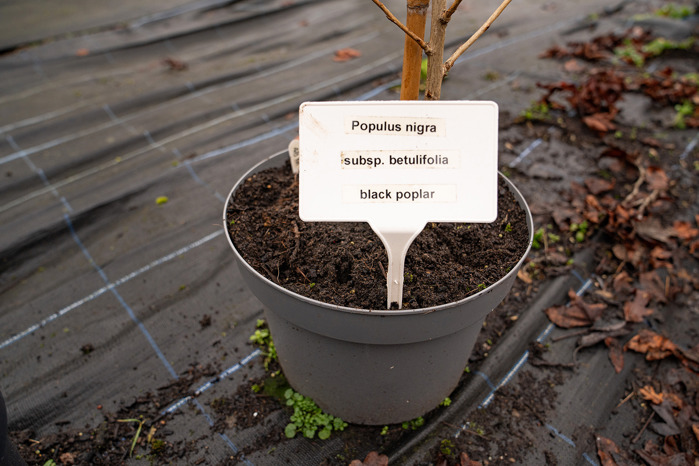
The black poplars cared for by Chester Zoo have undergone genetic mapping to confirm the trees are not hybrids.
Mr Hewitt said:
“We also want to ensure the planted trees are as diverse as possible. As they are cultivated from cuttings, they are technically clones, so it’s important to make sure rarer examples are grown.”
Councillor David Jefferay, Cheshire East Council’s cabinet member for environment, sustainability and waste management, said the Council was pleased to include the endangered black poplar in their woodland creation project.
He said:
“In line with our commitment to becoming carbon neutral by 2030, we aim to plant 120 hectares of new trees to absorb carbon and enhance habitat quality across Cheshire East. By working with conservation groups such as Chester Zoo, the council can help protect vulnerable species while expanding the borough’s capacity to store carbon in newly created woodlands. This has been a very successful collaborative project.”
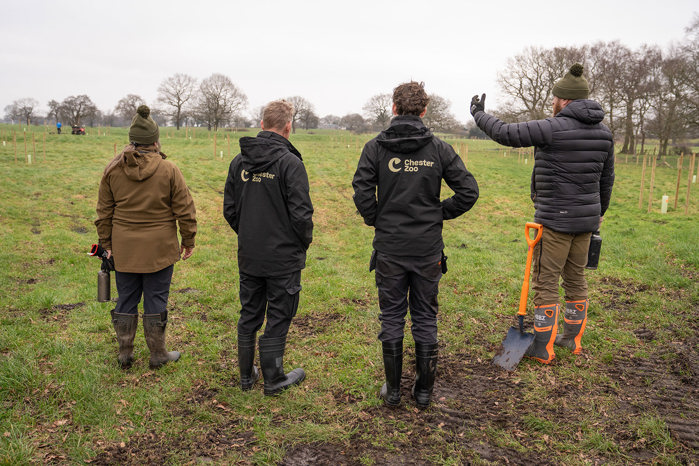
Claire Butterworth, Ecological Field and Office Lead for CLECO Ltd, said the CLECO team was proud to have delivered the wider woodland creation scheme, particularly the planting of black poplars.
She said:
“The care and expertise Richard and the team at Chester Zoo have invested in propagating these trees was evident in their quality. CLECO gave careful consideration to the placement of each male and female tree to maximise future pollination success and optimise growing conditions.
“Each individual tree is protected with parkland tree crates to support strong early establishment as they will form part of an agroforestry element within the wider woodland landscape.”
The planting of the black poplars marked the final stage of a 37,000-tree woodland creation project that CLECO delivered on behalf of Cheshire East Council.
Playing this role in returning these endangered native trees to the Cheshire landscape feels like contributing to a lasting legacy.
Claire Butterworth, Ecological Field and Office Lead for CLECO Ltd