Civet science
How one of our scientists is working to crack the conservation breeding code for an ultra-threatened mammal
Owston’s civets are Endangered according to the IUCN Red List of Endangered Species. In the wild, these slim, cat-like mammals are threatened by logging, mining and hunting and exploitation for the civet coffee industry. An insurance population of these striking, striped viverrids could help protect them from extinction and protect vital genetic diversity, but they are not breeding well in zoos.
Chester Zoo does not have civets on the zoo site, but one of our scientists is researching them to help boost their reproduction rates and hopefully turn things around.
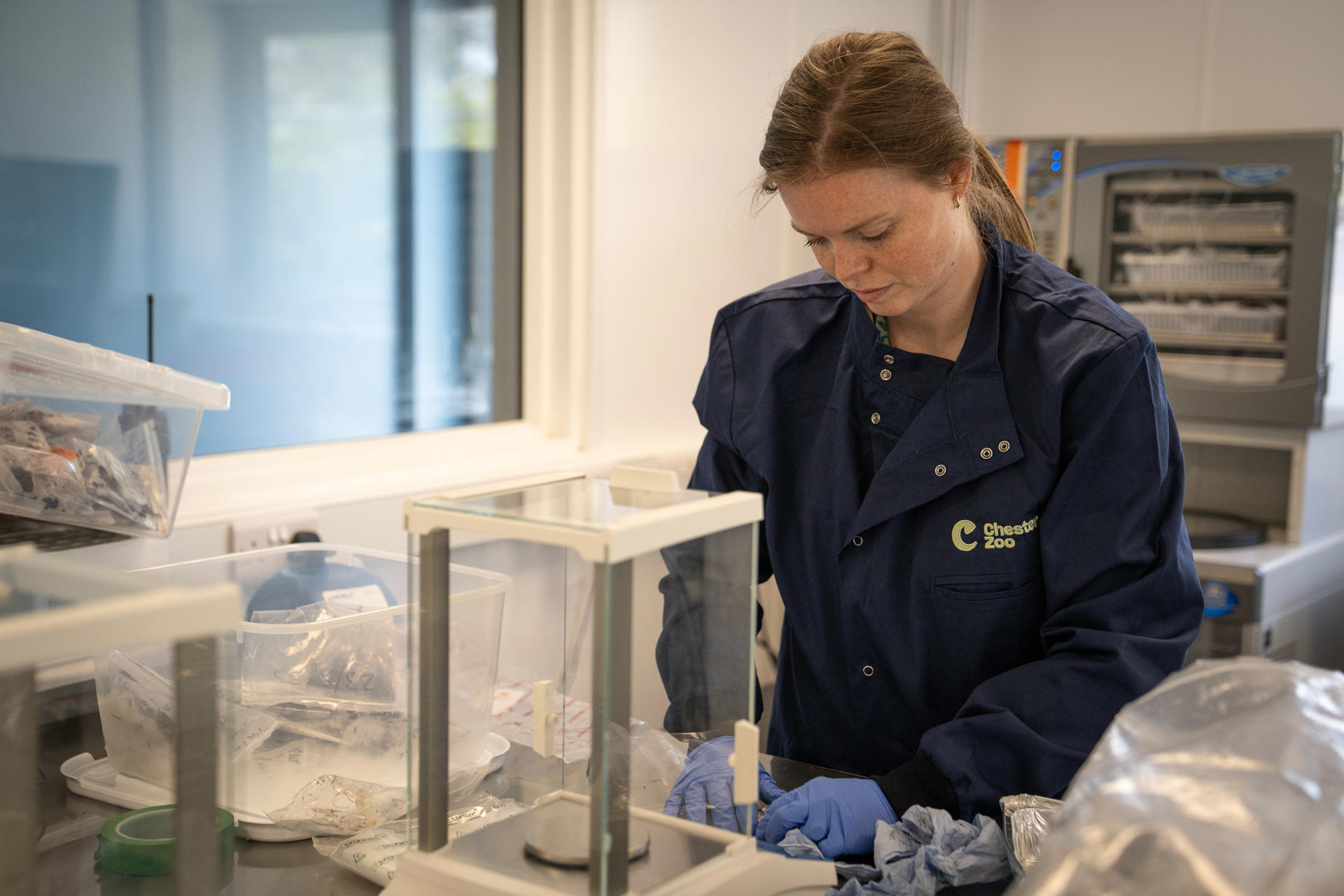
Dr Veronica “Ronnie” Cowl is the Senior Conservation Scientist for Chester Zoo. She carries out the majority of her work in the on site lab which expanded in 2024 when Chester Zoo launched its International Centre for Zoo Science.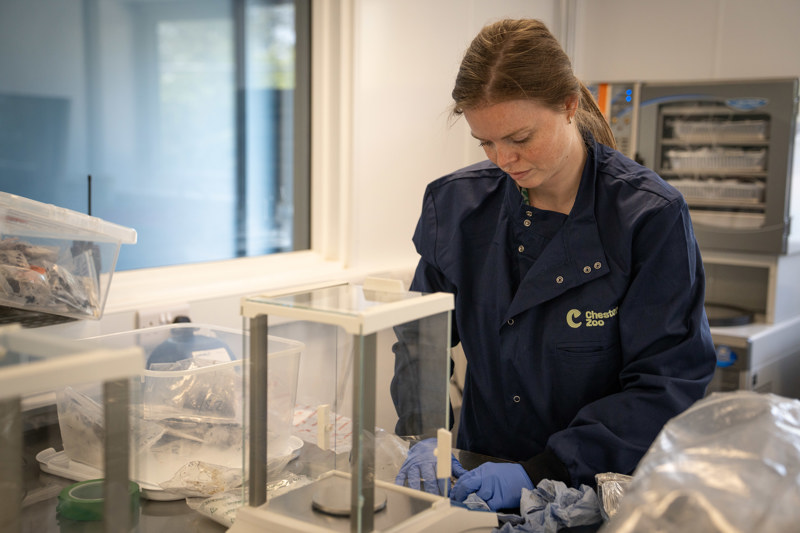
Over the last seven years, she has been collecting civet faeces and sperm for a study looking at five male Owston’s civets cared for by other UK zoos, to find out what a reproductively healthy civet looks like in terms of key reproductive biomarkers like testosterone.
Research has the potential to reduce the unknowns in conservation breeding. For instance, as much as zookeepers strive to provide environments that echo their wild homes, civets living in the UK experience different climates and lifestyles to their wild counterparts in Vietnam and Laos, which could have affected their breeding patterns. However, one of the findings of Dr Cowl’s research was that the breeding patterns were conserved between the UK and Vietnam, despite differences in the climate.
Dr Cowl said:
“I’ve looked at more than 800 faecal samples from male civets, and working with partners at Nature’s SAFE and ECOLifes, we conducted reproductive assessments where we carried out ultrasounds, and collected, evaluated, and cryopreserved sperm from multiple male civets. We wanted to see if there were health factors that could explain the low breeding rates, to understand what healthy reproductive organs should look like, how age-related issues might present in individuals and bank any valuable genetic material that we collected."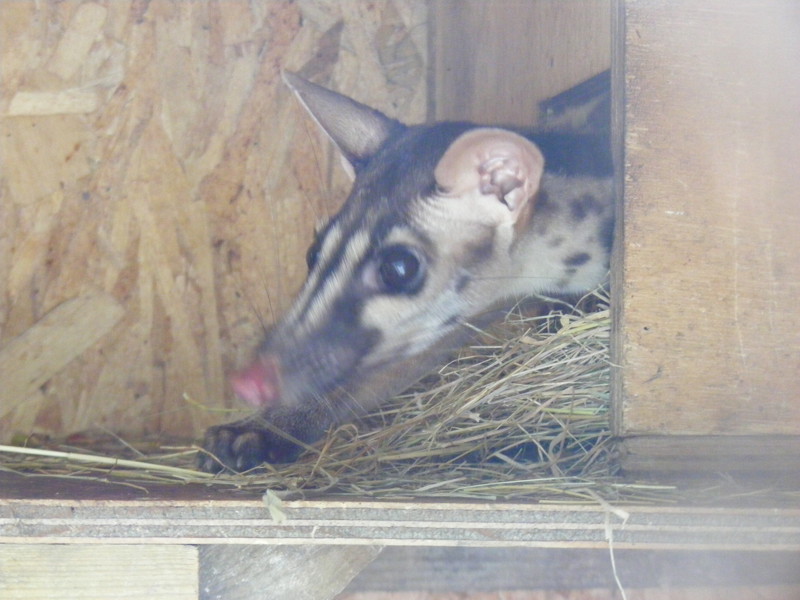
Owston's Palm Civet By Marie Hale (Creative Commons)
This is a species where very little is known about their reproductive biology, and almost nothing has been published.
Dr Cowl said:
"Though Chester Zoo doesn’t house civets, we do have the tools and resources to collaborate on this research. In 2022, after several years of hormone monitoring that didn’t highlight an obvious reason for a lack of breeding, we conducted reproductive assessments of several individuals to get a better insight into individual health and ‘normal’ reproductive parameters.”
There were a lot of unknowns, including when civets might be receptive to breeding. Previous births and published reports estimate that their breeding season might run from January to April but other published reports suggested it extended to November. That is a big discrepancy, and more accurate estimations could help keepers introduce breeding males and females with a greater degree of certainty.
The study found that the males had defined testosterone peaks between December and May, in line with wild observations, offering a clearer window for introductions.
Dr Cowl has shared these and other conclusions with colleagues in Vietnam, where a dedicated breeding centre in Cúc Phương National Park has seen significant success, with more than 50 offspring born in the last two years. The next step is to analyse faecal samples from Cúc Phương and to compare the results with the UK population to crack the civet conservation breeding code.
Read the paper here.