Full circle from Chile to Chile
Conservationist Paul Bamford explains how he came to care for cacti
Paul Bamford is the Regional Field Programme Senior Manager for the Chester Zoo’s Latin America conservation work. He oversees a portfolio of conservation work which includes projects that monitor and protect Andean bears, tapirs, achoque salamanders and goodeids, a family of freshwater fish. But his work with highly endangered Copiapoa cacti is particularly close to home…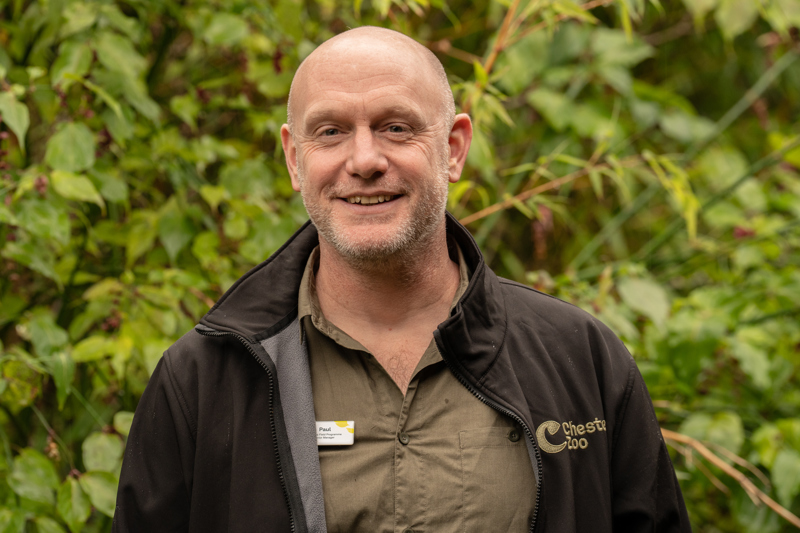
My first official step into conservation was when I took a BTEC National Diploma in animal care aged 16, but the real roots of my interest in Latin American ecology is that I spent six years of my childhood there, growing up in Chile from 1986 to 1992, and I returned to live there as an adult before being offered this role at Chester Zoo. There’s quite a nice circularity, as the cactus project is based in Chile.
I joined Chester Zoo in 2019. Just before I came in, the Field Programmes department had undertaken strategic reviews for our global regions, looking at the conservation programmes we ran and supported, and areas where we could potentially have more impact. One conclusion of the Latin American review was that we could do more with plants, and as the zoo holds four National Collections of Latin American plants (Pleurothallidinae orchids and three genera of cacti, including Copiapoa), this seemed like an obvious link and good synergy.
At the same time, Bárbara Goettsch, Co-Chair of the IUCN SSC Cactus and Succulent Plants Specialist Group, was working toward a similar aim. In 2017, my colleague-to-be led the global cactus Red List assessment, which highlighted the need for formal planning for the conservation of cacti. The planets sort of aligned, and we ended up joining forces to protect Copiapoa.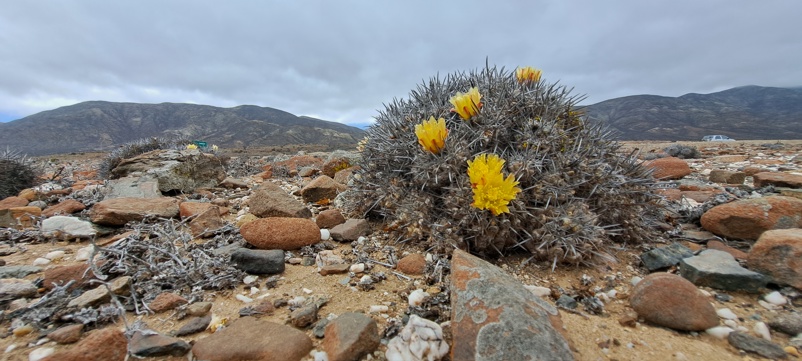
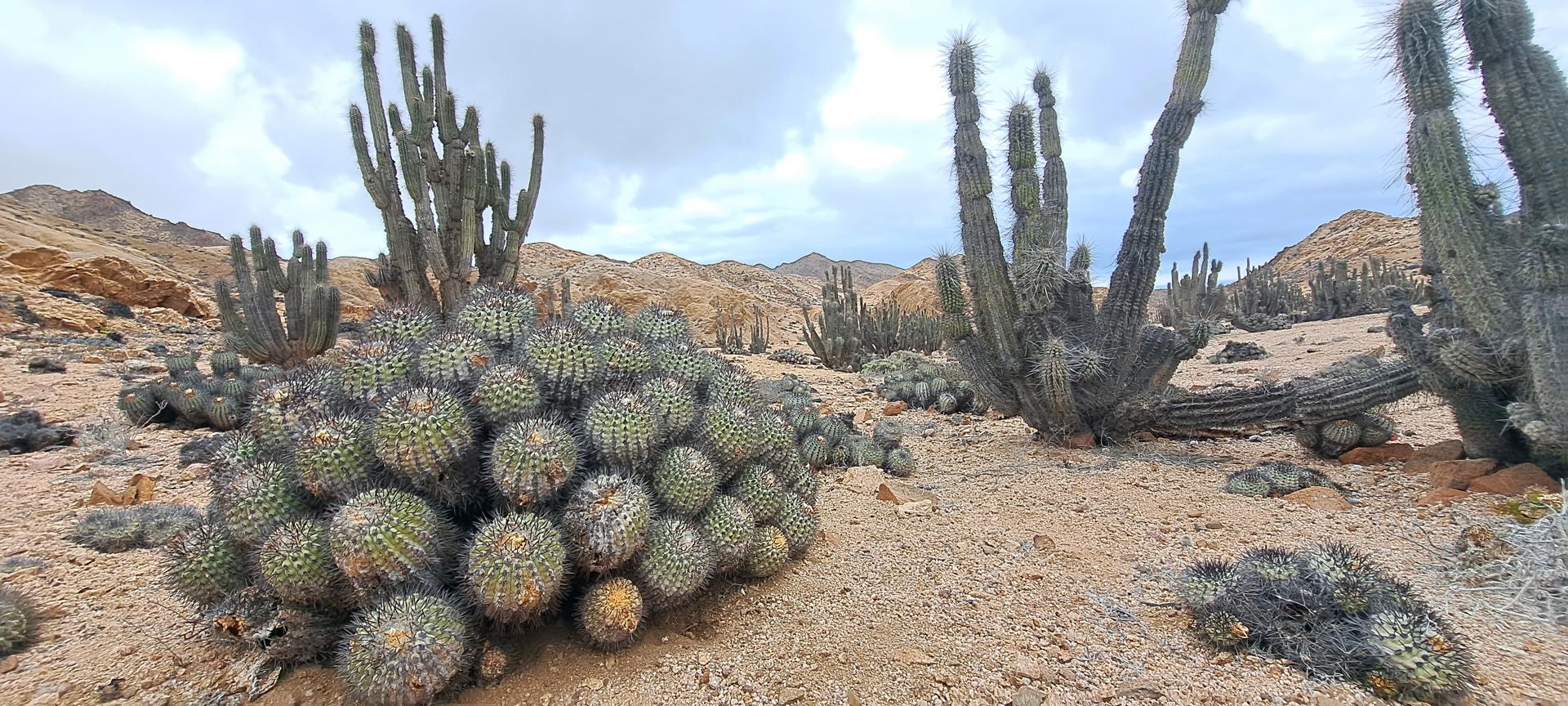
Copiapoa is a genus of cacti that are endemic to Chile. Of the 32 species which live in the hyper-arid Atacama Desert, more than two-thirds are categorised as Critically Endangered or Endangered on the IUCN Red List of Threatened Species. Copiapoa grow and reproduce slowly and rely on ants to move their seeds, which means colonies are extremely restricted and can easily be wiped out. They are a vital life support system for other species, from lichens to insects that benefit from how they funnel and retain water, to guancos, a wild camelid that feeds on them.
Because cacti have evolved to survive in conditions that humans see as pretty horrible – the Atacama Desert experiences intense heat and UV levels and sees about 1.5mm of rainfall a year – people don’t think they are vulnerable. But if you take them away from their very specific ecological niches, they die. And that’s what’s happening: poachers are removing them, climate change is altering their ecosystems faster than they can adapt, and they are also threatened by illegal off-roading, unsanctioned construction work, and weak legal enforcement of compensatory planting when legitimate constructions take place.
Over the last six or seven years, Bárbara and I have been coordinating Copiapoa conservation actions, bringing in a range of stakeholders to address the threats they face. We put together an action planning workshop which was due to take place in person in 2020. Then Covid came along and the world stopped moving.
Once that crisis ebbed, we had to dust ourselves off and restart. We brought a group together for a virtual workshop in 2022, including representatives from the Chilean government, the IUCN, and the Conservation Planning Specialist Group Brazil.
Now we’re at the stage where the action planning has given way to action. The plan involves many strands, so focusing purely on those areas Chester Zoo is involved in, we are:
- Building public awareness of Copiapoa through social media, a new website and through microdocumentaries on YouTube, to break down the assumption that cacti are invulnerable
- Connecting with community groups and schools on the ground to spread cactus conservation education messages
- Supporting the INIA Intihuasi Seedbank to carefully collect and save Copiapoa seeds to preserve the species. Beyond that, we want to roll out certification schemes so the companies that buy seeds to mitigate environmental disturbance know that they are collected sustainably. There’s no point planting Copiapoa seeds harvested from over-exploited colonies, because that will just damage the population.
We’re also in the early stages of connecting with tourism companies to reduce the damage caused by off-roading. The idea is to offer certified 4x4 routes which stop people driving through and pulping these slow-growing cacti, some of which are so small they’re difficult to see even if you’re walking through the desert in search of them.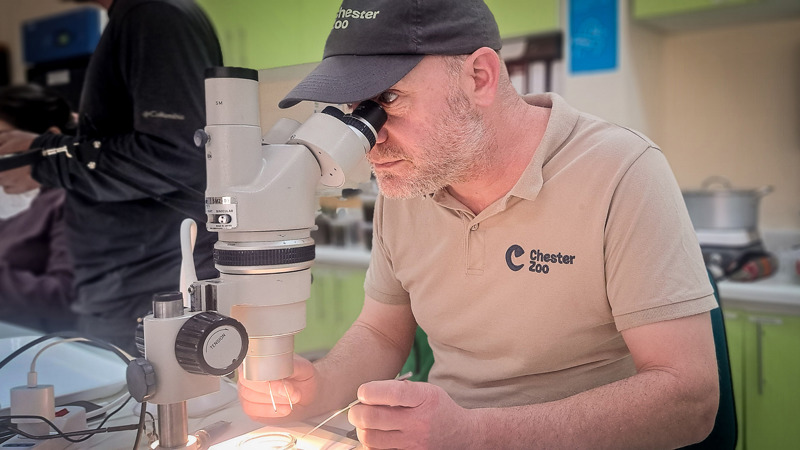
Richard Hewitt from the plant team and I visited the Chilean government’s Cactus Rescue Centre, which now houses thousands of rare cacti confiscated from the illegal trade. They are expecting another two transfers of poached cacti soon and have reached the point where they don’t have room to house them all. We’ve helped them expand their premises and fund the purchase of extra pots and substrate, but further along the line, we’re looking at distributing some of these cacti. As transplantation back into their habitats has a high failure rate, they’ll go to trusted botanical gardens and collections, and we want to use them as ambassadors to tell the Copiapoa story through interpretation signage and build public support.
It’s a lot of work, and it is highly collaborative. The project has real momentum now. Copiapoa might be slow growing, but their conservation is picking up speed.