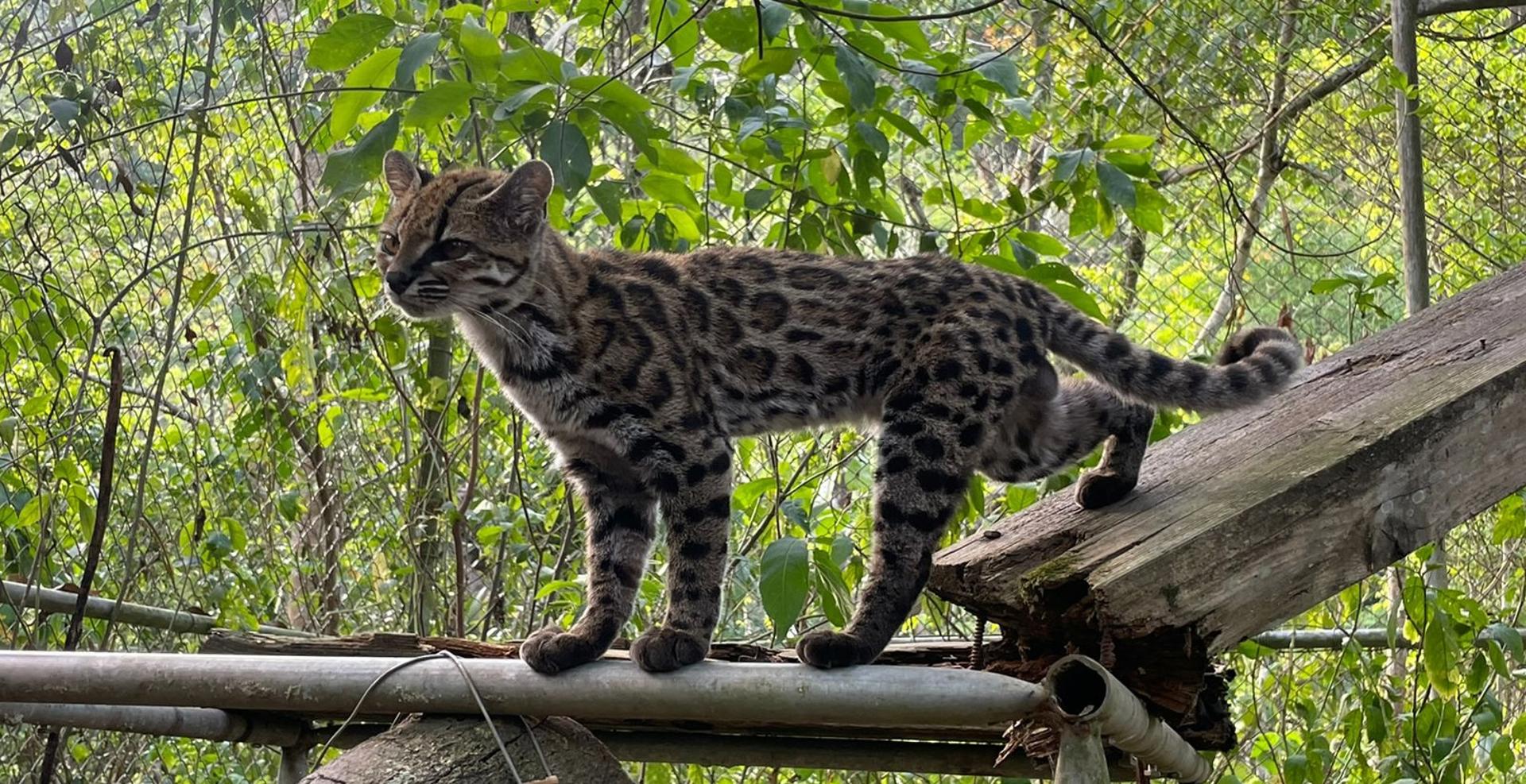
New cat shines spotlight on Bolivian species
Chester Zoo conservationists say the scientific recognition of a new wild cat shows the region deserves more protection
The world is abuzz with news of Leopardus tilcayo, a small wild cat that has been living secretly in the cloud forest of Bolivia.
This is the first feline to be newly described to science for a century – and one of our scientists has met the individual that sparked global interest in the species.
Paola Nogales-Ascarrunz, the scientist who first suspected and later confirmed the cat was a distinct species, is a colleague of our Latin America team and has helped Chester Zoo scientists identify wild cats that have appeared in the wildlife monitoring data that has emerged from our Andean Carnivore Conservation Project.
Through this link, Ximena Velez-Liendo, our on-the-ground carnivore expert in the inter-Andean dry forests has visited the rescue centre where the cat is now cared for after it was mistakenly taken home as a pet by a local man.
Dr Velez-Liendo, said:
“It’s small, similar to a domestic cat. The thing that drew the researchers' attention was that it looked like an oncilla tiger cat (Leopardus tigrinus), but had different markings.
“I’m really excited about the discovery. It highlights the importance of science and research in this region where there has been little previous work.”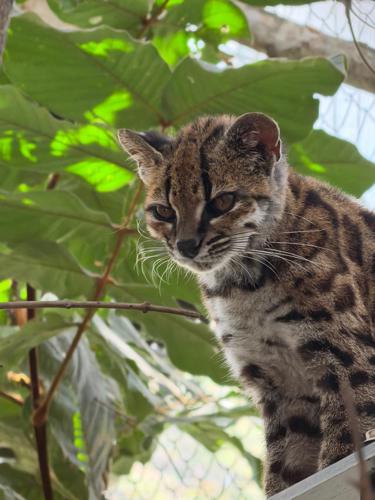
We have images from cats that don't quite fit the known species as they are supposed to look, so it would be really exciting if any of them turned out to be this or some other as-yet undescribed species.
Dr Velez-Liendo
The cat is referred to by its local name tilcayo as it has been known to local communities for generations. It resembles a small group of felines known as tiger cats, but recent genomic analysis confirmed it is genetically different to other known members of that grouping.
South America is rich in feline species. Dr Velez Liendo and Chester Zoo Regional Field Programme Senior Manager Paul Bamford published a paper early in the year in Check List, the journal of biodiversity data, which reported new distribution data for 18 mammal species in Tarija, Bolivia.
This included new findings about the size of wild cat ranges, covering species like pumas, jaguarundis and margays. Felines regularly appear on camera traps set up as part of the zoo’s Andean Carnivore Conservation Project.
However, the region is under serious ecological pressure due to climate change and over-grazing by cattle.
Dr Velez-Liendo said: “We will be keeping a close eye out for the tilcayo in our research area from now on. Although it was found in the Yungas region, which is a humid area, we are not rejecting the possibility that its range may stretch down to the inter-Andean dry forests where we work.”
Chester Zoo’s Bolivian project centres on Andean bears, but the protection measures that benefit them should also help smaller carnivores, which our conservationists say deserve more scientific attention.
Paul Bamford said:
“The key take away from this discovery is that smaller cats are under-studied, and their classification may be much more complex than we had previously understood. If we don't understand them, we won't know how to conserve them, so this discovery, and continued research into Bolivian species, is really important.”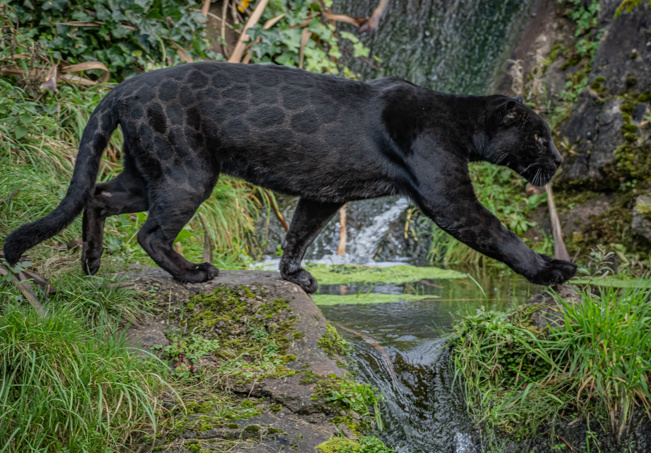
Chester Zoo itself is involved in the conservation breeding of several Latin American cat species, including margays and their much bigger jaguar cousins.
Read discoverer Dr Paola Nogales Ascarrunz's paper here.
Find our assessment of mammals in Tarija here.
Header photo and close-up of leopardus tilcayo by researcher Paola Nogales Ascarrunz (permissions given)