World's first cancer treatment saves python after tumour destroys part of her jaw
After a tumour returned and began invading her jawbone, Jodie the reticulated python became the first known snake to undergo electrochemotherapy.
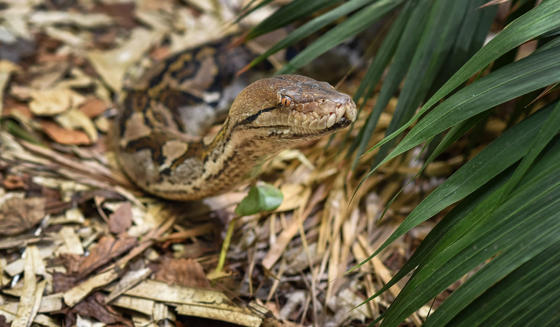
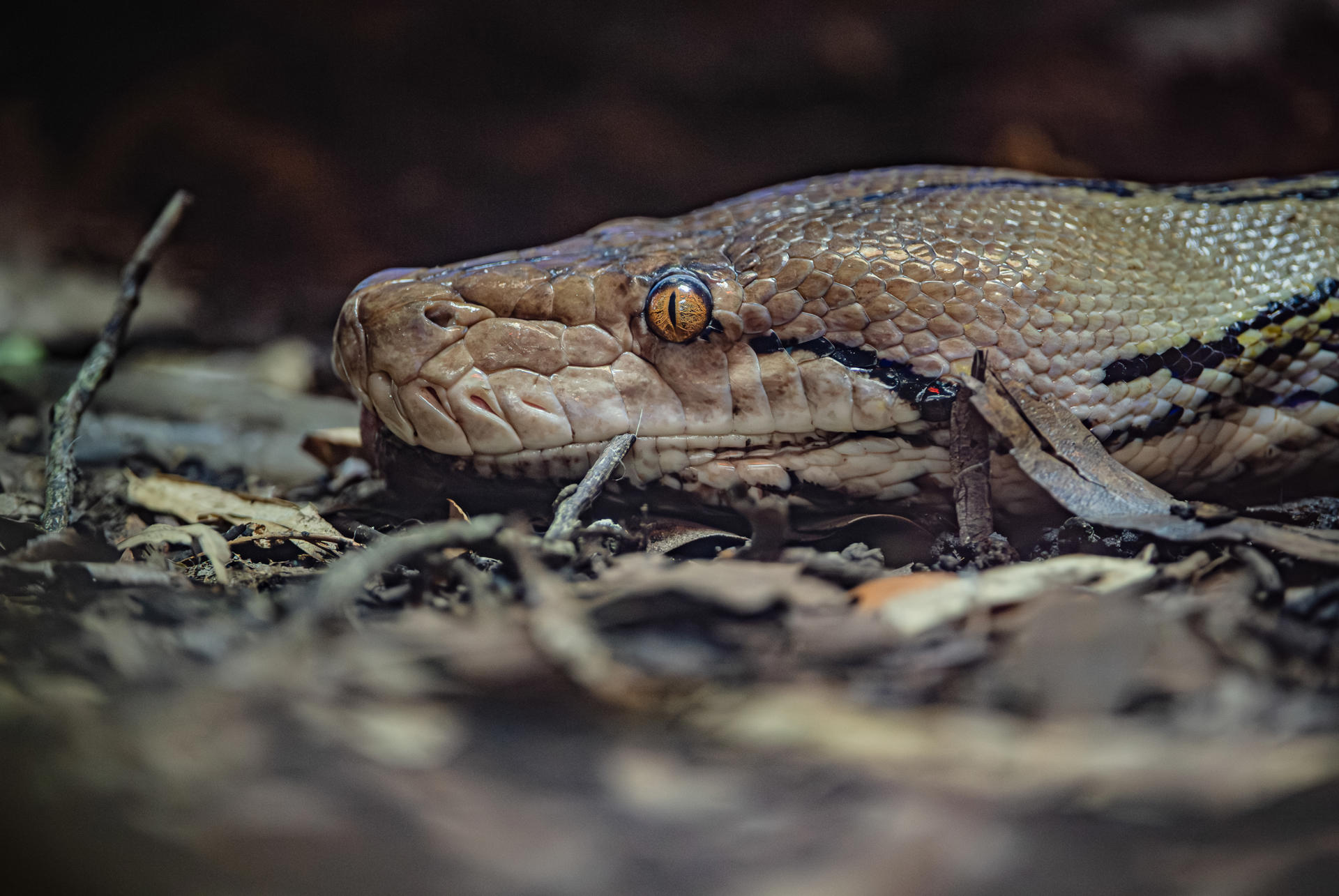
A 15-foot reticulated python named Jodie Foster has made a full recovery after becoming what is believed to be the first snake in the world to receive electrochemotherapy, a pioneering cancer treatment usually used in humans. Working alongside specialists from the University of Liverpool, our veterinary team adapted the treatment after a cancerous tumour returned and began invading Jodie's jawbone. Months later, 50kg Jodie Foster is cancer-free and back to her usual "bright and feisty" self.
When keepers first spotted the problem
Keepers first became concerned when Jodie began eating less and spending more time inactive in her habitat.
Tests confirmed she had a fibrosarcoma, a malignant tumour, in her jaw. Although vets initially removed the tumour, it later returned.
Ian Ashpole, Veterinary Officer at Chester Zoo said:
“When the tumour came back and started destroying part of her jawbone, we knew more surgery on its own probably wasn't going to be enough. We were facing the possibility of losing her as the tumour made it more and more difficult for her to eat, so we worked with cancer specialists to see whether we could adapt electrochemotherapy for a snake. As far as we're aware, this is the first time it's ever been used in one."
Adapting a human cancer treatment for a snake
With no operating table built for a python of Jodie's size, keepers and vets improvised. She was anaesthetised in her own habitat before being carefully carried to the zoo's veterinary centre.
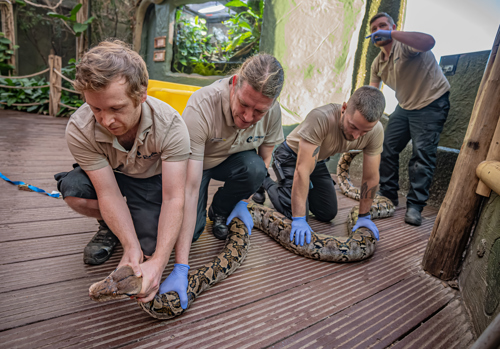
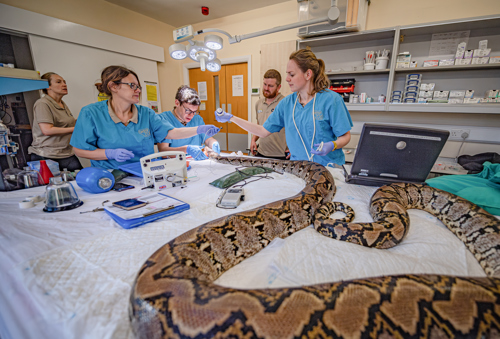
"She is so big we had to put two operating tables together, effectively making one the size of a double bed. We used heated blankets and warmed air to keep her body temperature stable throughout the operation. After 90 minutes of surgery, she recovered remarkably quickly."
Dr Ian Ashpole, Veterinary Officer at Chester Zoo
Dr Ashpole first removed the tumorous mass and performed a hemo-mandibulectomy, removing part of Jodie's diseased jawbone, before electrochemotherapy was administered to target any remaining cancerous cells.
The treatment combines the cancer drug bleomycin with a series of carefully controlled electrical pulses delivered directly to the tumour site. The pulses temporarily make cancer cells more permeable, allowing the drug to enter more effectively. This means lower doses of chemotherapy can be used, often in a single procedure.
A world first for veterinary medicine
Jose Alvares Picornell, Department of Small Animal Clinical Science, University of Liverpool, said:
"Electrochemotherapy is an emerging treatment, and this was the first time it had been used in a snake The success of this treatment is a testament to the power of collaboration. By working closely with Ian, we were able to develop a plan that not only benefited Jodie Foster but will also contribute to the wider veterinary community.
“We will be formally publishing details of the procedure so that veterinary colleagues around the world can learn from and build upon our approach. This has been a very special career highlight for me, and a fantastic opportunity to expand the work we do within the Department to support high-quality veterinary and translational research.”
Back to her bright and feisty self
Despite losing part of her jawbone, Jodie's appetite and hunting ability have not been affected.
Pythons can unhinge their jaws to swallow prey many times the size of their head, and months of observation since surgery have shown Jodie continues to strike, grip and swallow food without difficult.
A final check this week confirmed she remains free of any signs of the cancer returning.
Dr Ashpole added:
“Seeing her back to her normal bright and feisty self has been incredibly rewarding. A few months ago, we genuinely didn't know whether she'd survive. Now she's eating normally, exploring her habitat and behaving exactly as we'd hope.
“It also shows how much veterinary medicine is advancing. By bringing together zoo vets and cancer specialists, we've been able to use a treatment developed for people to save an animal in a way that's never been done before.
“One day we're treating a tiny frog that weighs just a few grams, the next we're carrying a 15-foot python into theatre. That's what makes this job so interesting and fun.”
How Jodie got her name
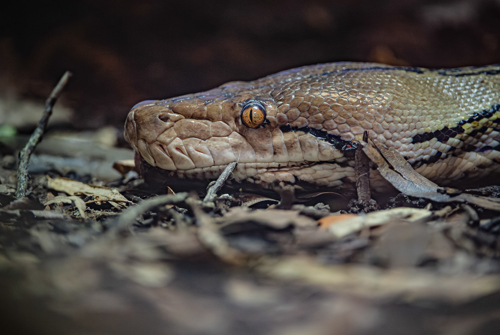
Jodie was named by keepers when she first arrived at Chester Zoo after they noticed her paperwork was marked "JF" - shorthand for "juvenile female" - and decided it suited the Oscar-winning actress's name.